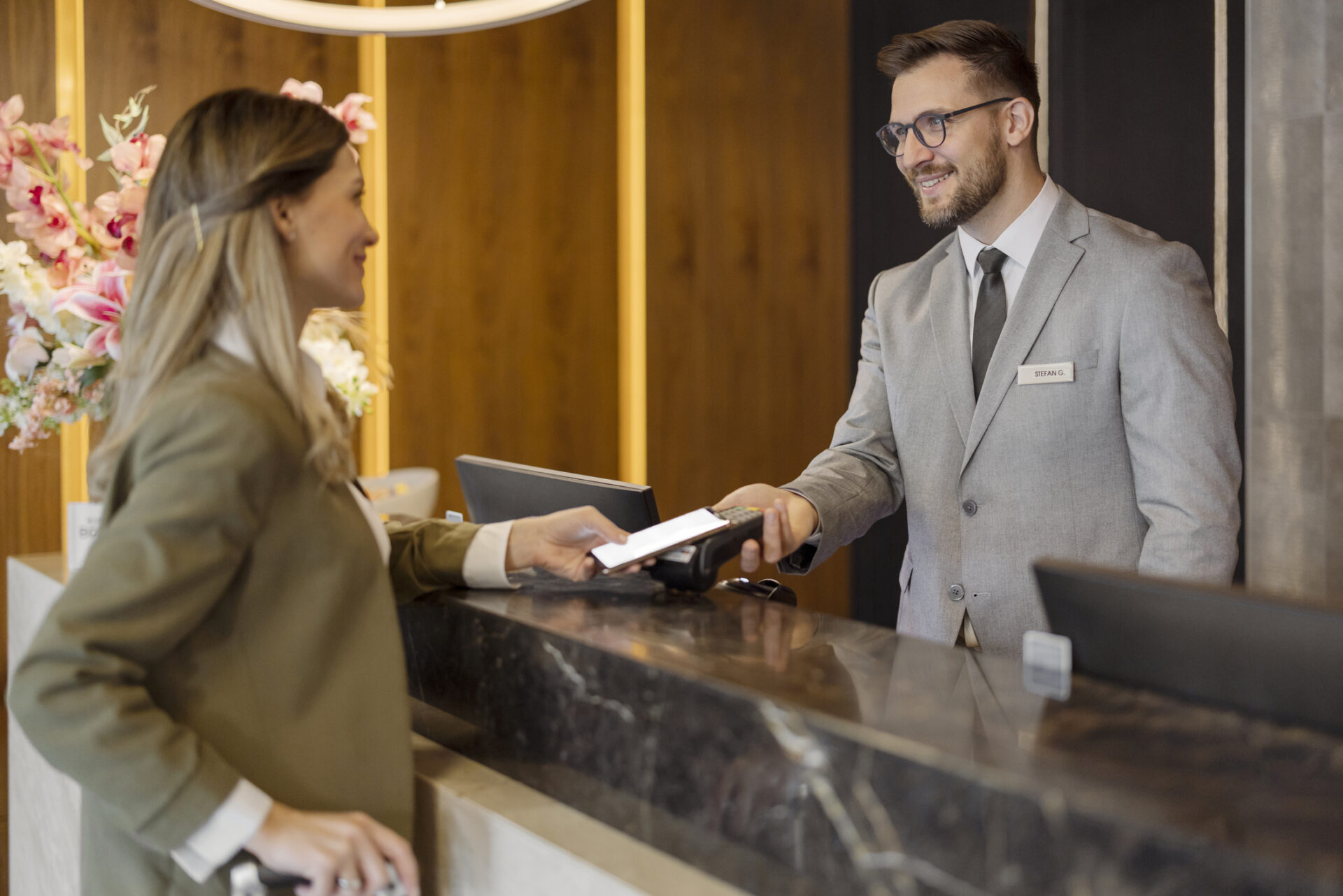
Checking into a hotel should feel like stepping into a warm, inviting space—not like standing in line at the DMV. Yet, for many travelers, the traditional check-in process is exactly that: a slow, paperwork-heavy routine that tests their patience before they even reach their room. In an age where guests can order a rideshare, check into a flight, or unlock their smartphone with a simple tap, hotel check-in has often lagged behind.
Thankfully automated check-in is now a thing. By eliminating long waits, reducing operational bottlenecks, and enhancing security, automated check-in systems create a smoother, more efficient guest experience. Whether through self-service kiosks, mobile check-in, or biometric authentication, hotels are embracing automation to meet the expectations of modern travelers. But beyond convenience, automated hotel check-in plays a critical role in optimizing hotel operations and reducing costs. As hotels rise to meet these demands, understanding how to implement, maintain, and balance automation with personalized service is essential.
What is an Automated Check-In System?
An automated hotel check-in system is a digital solution that allows guests to check in to a hotel, resort, or other accommodation without interacting with a front desk staff member. This process is typically powered by self-service kiosks, mobile apps, QR codes, or keyless entry systems, making the arrival process seamless, efficient, and often contactless.
How Hotel Automated Check-In Differs from Traditional Check-In
| Feature | Traditional Check-In | Automated Check-In |
| Process | Guests check-in at the front desk with staff assistance. | Guests use self-service kiosks, mobile apps, or pre-arrival check-in options. |
| Speed | Can be slow due to lines, paperwork, and ID verification. | Faster, often under a minute, with digital authentication. |
| Guest Interaction | Face-to-face with hotel staff. | Minimal or no human interaction, fully digital. |
| Check-in Time | Limited to front desk hours. | Available 24/7. |
| Key Access | Physical key cards issued at the front desk. | Digital room keys via smartphone or automated key lockers. |
| Customization | Staff can provide recommendations and upsell services. | Personalization through digital preferences and AI-driven upsells. |
| Security | Manual ID verification is prone to human error. | Automated ID verification and encrypted digital key systems. |
| Operational Efficiency | Requires significant staff resources. | Reduces front desk workload and staffing needs. |
Why Hotels Are Switching to Automated Check-In
Hotels, resorts, and campgrounds are embracing automation to streamline operations, reduce costs, and enhance the guest experience. With self-service options, guests enjoy greater convenience, while hotels can allocate staff to more personalized services.
For enterprise-level property managers, automated check-in integrates seamlessly with property management software (PMS) like Newbook, providing real-time reservation updates, keyless access, and guest communication—all in one centralized platform.
Benefits of Automated Check-In for Hotels and Guests
1. Efficiency & Speed: Reducing Front Desk Wait Times
Long wait times at the front desk can be frustrating, especially after a long journey. Hotel automated check-in systems streamline the process by allowing guests to check in digitally through self-service kiosks, mobile apps, or web portals. This significantly reduces wait times, enabling guests to access their rooms faster and improving overall satisfaction.
2. 24/7 Convenience: Allowing Guests to Check in Anytime
Traditional check-in hours can be restrictive, especially for late arrivals or peak travel times. Automated check-in offers flexibility, allowing guests to arrive at any time and access their room without depending on front desk staff.
3. Cost Savings: Reducing Staff Workload & Operational Costs
Automating routine check-in tasks allows hotels to allocate staff resources to more valuable guest interactions rather than administrative work. This reduces labor costs and enhances efficiency, making it possible to run operations smoothly with a smaller team.
4. Enhanced Guest Experience: Minimizing Friction in the Check-in Process
A smooth, hassle-free check-in experience sets the tone for a guest’s stay. Eliminating paperwork and delays allows guests to settle in quickly. Many automated systems integrate with keyless entry, enabling guests to unlock their rooms via smartphone and avoiding the inconvenience of lost keys.
Additional Benefits for Hotels
- Increased Upselling Opportunities: Digital check-in allows guests to choose upgrades, late checkouts, or additional services.
- Better Data & Insights: Automated systems track guest preferences and behaviors, helping hotels personalize future stays.
- Seamless PMS Integration: When integrated with a property management system like Newbook, automated check-in syncs with bookings, payments, and guest communications for a fully connected experience.
Types of Automated Hotel Check-In Solutions
Automated check-in solutions are great for enhancing efficiency, security, and guest convenience. This technology means hotels can optimize operations while providing a modern, hassle-free check-in experience for guests. Let’s take a look at the different types of automated hotel check-in:
| Check-In Solution | How It Works | Best For | Key Benefits |
| Self-Service Kiosks | Guests check in using touchscreen kiosks in the hotel lobby. | High-traffic hotels, business travelers, urban hotels. | Reduces front desk congestion, speeds up check-in, minimizes staff workload. |
| Mobile Check-In & Digital Keys | Guests check-in via a mobile app or web portal and access their rooms using a digital key. | Tech-savvy travelers, contactless stays, loyalty program members. | Eliminates front desk wait times, enhances security, and improves convenience. |
| Biometric Check-In | Uses facial recognition, fingerprint scanning, or iris scanning to verify guests and grant access. | Luxury hotels, high-security properties, VIP guests. | Provides a secure, seamless, and futuristic check-in experience. |
| PMS-Integrated Check-In | Automated check-in solutions fully integrate with the property’s Property Management System (PMS). | Multi-property chains, enterprise hotels, campgrounds, resorts. | Enables real-time data syncing, reduces errors, and streamlines operations. |
1. Automated Hotel Check-In Machines: Self-Service Kiosks in Hotel Lobbies

How It Works:
Self-service kiosks act as digital receptionists, allowing guests to check-in without speaking to a front desk agent. These kiosks typically feature:
- Touchscreen interfaces for guest interaction.
- ID verification via passport or driver’s license scanners.
- Payment processing for room charges and incidentals.
- Room key dispensing for quick access.
Best Suited For:
- Large hotels, business hotels, and urban properties with high foot traffic.
- Hotels looking to reduce front desk congestion.
- Properties that cater to independent travelers who prefer self-service options.
Key Benefits:
- Reduces check-in wait times, leading to a smoother guest experience.
- Minimizes the need for constant front-desk staffing, cutting labor costs.
- Increases accuracy by automating ID verification and payment processing.
- Allows guests to upgrade rooms or purchase additional services on-screen.
2. Mobile Check-In & Digital Keys: Smartphone-Based Access
How It Works:
Mobile check-in allows guests to bypass the front desk entirely by checking in through a hotel app or web portal before arrival. Digital keys, delivered via smartphone, enable room access through Bluetooth or NFC technology.
Best Suited For:
- Tech-savvy travelers, business professionals, and loyalty program members.
- Hotels prioritizing contactless experiences.
- Resorts or properties with large campuses where digital key access enhances convenience.
Key Benefits:
- Eliminates front desk wait times, providing a seamless arrival experience.
- It reduces reliance on plastic key cards, eliminating costs associated with replacing misplaced cards and being better for the environment.
- Enhances security with encrypted digital keys that cannot be lost or stolen.
- Improves guest engagement by integrating check-in with mobile concierge services.
3. Biometric Check-In: Facial Recognition & Fingerprint Authentication
How It Works:
Biometric check-in authenticates guests by replacing traditional ID verification with facial recognition, fingerprint scanning, or iris scanning. This technology is often integrated into self-service kiosks or mobile apps.
Best Suited For:
- Luxury hotels, high-security properties, and VIP check-in experiences.
- Hotels catering to international guests who may face language barriers.
- Properties focusing on innovation and tech-driven guest experiences.
Key Benefits:
- Enhances security by ensuring only the registered guest can access the room.
- Eliminates the need for physical documents or key cards.
- Speeds up the check-in process significantly.
- Reduces fraudulent check-ins and identity theft risks.
4. Integration with Property Management Systems (PMS)
How It Works:
An automated check-in system becomes most effective when fully integrated with a PMS like Newbook. This allows:
- Real-time reservation updates across multiple hotel locations.
- Automated guest communication, such as pre-arrival messages and digital confirmations.
- Seamless payment processing linked to guest profiles.
- Enhanced operational efficiency, reducing manual data entry errors.
Best Suited For:
- Large hotel chains, resorts, campgrounds, and multi-property enterprises.
- Hotels looking for a fully connected guest journey, from booking to check-out.
- Properties managing a high volume of guests needing automated workflows.
Key Benefits:
- Ensures all check-in data is automatically synced across hotel departments.
- Reduces operational bottlenecks by streamlining guest registration and payments.
- Improves guest personalization by tracking preferences across multiple stays.
- Enhances overall hotel performance through data-driven decision-making.
How Hotels Can Implement an Automated Check-In System
Transitioning from a traditional check-in model to an automated system requires careful planning, the right technology, and proper staff and guest education. Below is a step-by-step guide to ensure a smooth implementation.
1. Steps to Transition from Traditional to Automated Check-In
Evaluate Your Hotel’s Needs and Goals
Before diving into automation, hotels must assess their specific needs and challenges. Consider the following:
- Guest Demographics: Are your guests business travelers, families, tech-savvy millennials, or older guests who may need additional support?
- Hotel Size & Check-In Volume: High-traffic hotels may benefit from kiosks, while boutique hotels might focus on mobile check-in.
- Operational Bottlenecks: Identify common issues at check-in, such as long wait times, staff shortages, or paperwork delays.
- Cost vs. ROI Analysis: Calculate the potential savings from reduced front desk staff costs, increased upselling, and improved guest satisfaction.
- Guest Expectations: Consider whether your target audience prefers self-service options or still values a mix of human interaction.
Choose the Right Type of Automated Check-In
There are multiple options available, and choosing the right one depends on the hotel’s operational structure and guest preferences:
- Self-Service Kiosks: Ideal for hotels with high check-in volumes, these kiosks allow guests to check in, verify their ID, make payments, and receive a room key within minutes.
- Mobile Check-In & Digital Keys: This option is best for tech-savvy travelers and loyalty program members. It enables guests to check in via a mobile app and use their smartphone as a room key.
- Biometric Check-In: Cutting-edge technology for luxury or high-security properties, offering facial recognition or fingerprint authentication for seamless entry.
- PMS-Integrated Check-In: A must, especially for multi-property chains, ensuring that all reservations, payments, and guest information sync in real-time across multiple systems.
Integrate the System with Your Property Management Software (PMS)
For automation to work efficiently, the check-in system must integrate with the hotel’s PMS. Key integration features include:
- Real-Time Reservation Updates: Ensures that any last-minute bookings or cancellations are immediately reflected in the system.
- Guest Profiles & Preferences: Stores guest history, room preferences, and loyalty status for personalized experiences.
- Automated Communication: Sends confirmation emails, mobile check-in links, and digital key access details to guests.
- Billing & Payment Processing: Allows guests to pre-pay, add extras, and settle bills seamlessly.
- Housekeeping & Room Status Updates: Notifies the housekeeping team when a room is occupied, vacant, or requires cleaning.
Implement Security and Compliance Measures
Security should be a top priority when handling guest data and payment information. Hotels must implement:
- End-to-End Encryption: Protects guest payment details, digital keys, and personal data from cyber threats.
- Multi-Factor Authentication (MFA): Adds an extra layer of security for guest logins and digital key access.
- Secure ID Verification: Uses AI-powered document scanning or facial recognition to verify guest identity.
- Compliance with Data Protection Laws: Ensure compliance with GDPR (Europe), PCI DSS (payment security), and CCPA (California Consumer Privacy Act) regulations.
- Physical Security for Kiosks: Place kiosks in well-lit, monitored areas to prevent unauthorized access.
Set Up the Infrastructure
Once the technology is selected, hotels must prepare the physical and digital infrastructure:
- For Self-Service Kiosks
- Install kiosks in high-traffic areas such as the lobby, near entrances, or in conference centers.
- Ensure they are ADA-compliant and accessible to all guests. Newbook’s self-service kiosks are ADA-compliant.
- Offer multilingual support to cater to international travelers.
- For Mobile Check-In
- Develop or integrate a hotel-branded app with mobile check-in and digital key functionality.
- Ensure guests receive a confirmation email or SMS with clear instructions.
- For Biometric Check-In
- Set up facial recognition or fingerprint scanning stations.
- Ensure compliance with privacy laws regarding biometric data storage.
- For PMS Integration
- Work with a trusted software provider like Newbook to connect all check-in functions.
- Test the integration to ensure real-time updates across all departments.
Run a Trial Phase
Before a full rollout, hotels should conduct a pilot test to identify potential issues:
- Select a Test Group: Choose a small percentage of guests or a specific hotel wing to test the system.
- Monitor User Experience: Gather feedback on ease of use, efficiency, and any problems faced.
- Test Edge Cases: Simulate late check-ins, lost digital keys, or guest misidentification to troubleshoot potential issues.
- Adjust & Optimize: Use guest and staff feedback to refine the system before a full-scale launch.
2. Choosing the Right Automated Check-In System for Your Hotel
To select the best system, hotels should assess:
- Technology & Features: Mobile vs. kiosk vs. biometric solutions.
- Scalability: Can it handle future expansion or multiple properties?
- User Experience: Is it intuitive for all guests, including non-tech-savvy travelers?
- Security & Compliance: Does it meet encryption and data privacy standards?
- Cost & ROI: Compare pricing models and long-term benefits.
3. Staff Training & Guest Education for Smooth Adoption
Training Staff to Support Automated Check-In
Even with automation, staff still play a key role in ensuring a seamless experience. Training should include:
- How to troubleshoot common system issues.
- How to assist guests unfamiliar with self-service technology.
- Best practices for handling digital key failures or ID verification problems.
- How to monitor and maintain kiosk hardware and software.
- Upselling techniques via digital check-in for added revenue opportunities.
Educating Guests on How to Use the New System
Guest education is crucial for widespread adoption. Hotels should provide:
- Pre-Arrival Emails & Tutorials: Guide guests through mobile check-in and digital key usage.
- In-Lobby Signage & QR Codes: Display step-by-step instructions at check-in points.
- Customer Support Availability: Offer chat, phone, or on-site assistance for troubleshooting.
- Feedback Channels: Allow guests to report issues and suggest improvements.
Challenges and Considerations of Hotel Automated Check-In

While automated check-in offers a ton of benefits, successful implementation requires overcoming key challenges. Hotels must address security concerns, ensure accessibility, and find the right balance between automation and personalized service to create a seamless experience for guests.
1. Security Concerns and Data Privacy
Automated check-in systems handle sensitive guest information, including personal details, payment information, digital key access, and ID verification documents. Without proper security measures, hotels risk data breaches, identity theft, and fraudulent check-ins.
To mitigate these risks, hotels should implement end-to-end encryption to protect guest data, digital keys, and transactions. Multi-factor authentication, such as one-time PINs or biometric verification, adds an extra layer of security. AI-powered fraud detection can help catch suspicious activity, such as mismatched IDs or multiple failed login attempts.
Compliance with data privacy regulations like GDPR, PCI DSS, and CCPA is crucial to ensure guest information is handled correctly. Hotels using biometric check-in should store data securely or implement session-based authentication rather than permanent storage. Clear communication about data collection and usage policies is essential to building guest trust.
2. Ensuring Accessibility and User-Friendly Design
Not all guests are tech-savvy, and some may have disabilities or language barriers that make self-service check-in challenging. If the system is not designed with accessibility in mind, certain guests may struggle to use it, leading to frustration and dissatisfaction.
To address these concerns, hotels should ensure their self-service kiosks and mobile apps comply with accessibility guidelines. Features such as voice command functionality and adjustable text size can improve usability for visually impaired guests. Wheelchair-accessible kiosks with either adjustable height and/or touch-free interaction may be good options as well.
A hybrid model that combines automated and traditional check-in options also ensures that guests can choose the experience they are most comfortable with—so a guest can check in with a person if they want to during certain hours. A well-designed interface with clear step-by-step instructions, visual guides, and real-time support options also does a lot to create a seamless and stress-free check-in experience.
3. Balancing Automation with Personalized Service
One of the biggest concerns with automation is the potential loss of human interaction, which is a defining characteristic of hospitality. While self-service check-in speeds up the arrival process, some guests still value face-to-face interactions for assistance, recommendations, or a personalized welcome.
To maintain a human touch, hotels can implement a hybrid model where guests have the option to check in digitally or with a staff member. AI-driven personalization can enhance the guest experience by using past booking history and preferences to customize room assignments, welcome messages, and upgrade suggestions. Virtual concierge services integrated into hotel apps can provide quick access to frequently asked questions, restaurant recommendations, and room service options.
Having staff available in the lobby at peak hours to greet guests and provide assistance ensures that automation does not come at the expense of hospitality. In-app messaging or live chat support can offer quick solutions to any issues guests encounter while still offering that digital convenience that guests are looking for without eliminating human interaction. Follow-up communication via email or SMS after automated check-in can further enhance the guest experience by ensuring their stay meets expectations, but be sure to not be too pushy with it as too many messages can be annoying for guests.
Conclusion
Automated check-in is not just a passing hotel trend; it is a strategic transformation that allows hotels to provide a more seamless, secure, and personalized experience for guests. By implementing digital check-in solutions, properties can eliminate unnecessary friction, reduce operational costs, and allocate staff resources where they matter most—delivering exceptional hospitality.
However, technology alone is not enough. To truly succeed, hotels must prioritize accessibility, ensure strong security measures, and maintain a balance between automation and human touch. Guests should feel empowered by technology, not burdened by it. Whether through a hybrid model that blends digital check-in with concierge services or AI-driven personalization that tailors the guest experience, the key is to enhance convenience without sacrificing the human part of hospitality.
Ready to boost your hotel’s operations with the right software? Reach out to Newbook today for a free consultation or demo.