


Sections
- Brief History of Property Management Software
- Understanding Property Management
- What is Property Management Software (PMS)
- Setting Up Systems and Processes for Managing Properties Effectively
- Technologies that Enhance Property Management for Accommodation Providers
- Why Accommodation Providers Should Use Property Management Automation
- Benefits of Property Management Automation Software
- Trends in Property Management Automation
- How Revenue Management Systems (RMS) Relates to Effective Property Management
- Boost Revenue With a Fully-Featured Booking Engine
- Frequently Asked Questions
- Final Takeaways on Property Management Software
Brief History of Property Management Software

In the hospitality industry, where seamless guest experiences and operational efficiency are paramount, accommodation providers face many different challenges when it comes to managing their properties effectively. From hotels and resorts to campgrounds and vacation rentals, the ability to streamline operations, optimize resources, and deliver exceptional service is essential for success in a competitive market.
That’s where property management software (PMS) comes in. By leveraging the power of modern property management solutions, accommodation providers can transform their operations, enhance guest satisfaction, and drive sustainable growth.
Property management software isn’t exactly new in the hospitality industry, but like any effective technology, it’s undergone significant growth over the decades that it’s been around. Here’s a quick timeline of PMS:
- 1970s: Computer-based PMS was introduced. Sometime in the 1970s, the idea of using technology to manage things like bookings, guest data, and invoicing was introduced to the hotel and hospitality industry. During this time, the property management systems that were available were clunky and relied heavily on manual entry. However, these early computer systems still provided an effective way to organize and conduct basic operations.
- 1980s: PMS continued to evolve to be more efficient and even introduce crude automation. Computers became more sophisticated in the 1980s, allowing for property management systems to include time-saving features like automation for increased operational efficiency.
- 1990s: Modules for PMS were introduced. As computer technology continued to become more powerful and useful, so did software. PMS technology started being able to incorporate modules or integrations, allowing for tasks related to other parts of a hospitality business like accounting, bookkeeping, scheduling, and more to be developed and incorporated into the core system.
- Late 1990s to early 2000s: The Internet changes the game. As the internet became commonplace during this time, property management software became even more useful for the hospitality industry. The ability for guests to make reservations online became a reality, and third-party booking websites (that we know today as online travel agencies or OTAs) emerged. Suddenly, guests from all over the world could discover your business via a search engine, visit your website, and book with you.
- Present day: Cloud-based PMS. Cloud computing has revolutionized many pieces of software, including property management systems. Through the cloud, accommodation businesses can adapt and scale their systems without the need for on-premises hardware. Employees can access the system from anywhere with an internet connection and with any device. Smaller hospitality companies can better compete with larger businesses due to more affordable and accessible property management solutions.
As you can see, property management software has quickly become the go-to centralized tool for accommodation businesses of all sizes to help manage the entirety of their operations. Property management software revolutionizes every aspect of accommodation management from seamless reservation management and check-in processes to automated housekeeping schedules and integrated billing systems. By centralizing data, streamlining communication, and automating routine tasks, these sophisticated platforms empower accommodation providers to focus on what matters most: delivering exceptional service and creating unforgettable memories for their guests.
This article explores the critical role of property management software from the perspective of accommodation providers, examining how these innovative tools empower businesses to optimize their operations, streamline workflows, and deliver memorable guest experiences. Whether you’re managing a boutique hotel, a luxury resort, or a quaint campground, the principles outlined here are universally applicable, offering valuable insights and practical strategies to maximize efficiency and elevate your hospitality offerings.
Newbook is your all in one online booking system. Talk to us today to learn how you can improve operations and increase booking for your business.Your all-in-one, online booking system

Understanding Property Management

Property management in the hospitality industry is a multifaceted discipline that encompasses a wide range of responsibilities and tasks aimed at maximizing revenue while ensuring the satisfaction of guests and employees. From overseeing day-to-day operations to implementing strategic initiatives, property managers play a crucial role in maintaining and enhancing the performance of an accommodation business.
Hospitality property management can be a very lucrative career path, especially for those who have prior experience with managing business operations or administration. Managing an accommodation business means that you’ll have your hands in every point of its operation, including food service management, front desk operations, general hotel management (e.g., housekeeping, maintenance, scheduling) and event planning. You might not be doing all of these things directly, but you’ll oversee them as a property manager.
Responsibilities of Property Managers
Property managers have a variety of responsibilities that span various aspects of property ownership and operation. Some of the primary responsibilities include:
- Guest experience management: Property managers are responsible for ensuring that guests have a positive and memorable experience during their stay. This includes overseeing guest services, addressing complaints or issues promptly, and maintaining high standards of cleanliness and comfort throughout the property.
- Operations management: Property managers oversee the day-to-day operations of the accommodation, including housekeeping, maintenance, and security. They are responsible for ensuring that all systems and facilities are in good working order and that any issues are addressed promptly to minimize disruptions for guests.
- Financial management: Property managers are tasked with managing the financial aspects of the property, including budgeting, accounting, and financial reporting. They must ensure that expenses are kept in check, revenues are maximized, and profitability targets are met.
- Marketing and sales: Property managers play a key role in marketing and promoting the property to attract guests and maximize occupancy rates. This may involve implementing marketing campaigns, managing online bookings and reservations, and fostering relationships with travel agents and online travel agencies (OTAs).
- Compliance and risk management: Property managers are responsible for ensuring that the property complies with all relevant regulations and safety standards. This includes maintaining proper insurance coverage, adhering to zoning and licensing requirements, and implementing safety protocols to protect guests and staff.
Importance of Effective Property Management in Maximizing Revenue and ROI
Effective property management is essential for maximizing revenue and return on investment (ROI) for accommodation providers. The table below outlines the reasons why:
| Ways that a PMS Drives Revenue and ROI | Details |
| Optimizing operational efficiency | A well-managed property operates efficiently, minimizing downtime, reducing costs, and maximizing productivity. By streamlining operations and optimizing resources, property managers can improve the bottom line and enhance profitability. |
| Maximized occupancy rates | Property managers play a crucial role in maximizing occupancy rates by implementing effective marketing strategies, optimizing pricing strategies, and providing exceptional guest experiences. By attracting more guests and minimizing vacancies, property managers can increase revenue and maximize ROI. |
| Enhanced guest satisfaction | A key driver of revenue for accommodation providers is guest satisfaction. Property managers who prioritize guest satisfaction by providing personalized service, maintaining high-quality facilities, and responding promptly to guest needs can cultivate loyal customers who are more likely to return and recommend the property to others. |
| More effective strategic planning and decision-making | Effective property management involves strategic planning and decision-making to drive long-term success. Property managers who understand market trends, analyze performance metrics, and adapt to changing customer preferences are better positioned to make informed decisions that maximize revenue and ROI. |
| Risk mitigation | Property managers play a crucial role in mitigating risks and protecting the property’s assets. By implementing proper safety protocols, maintaining insurance coverage, and ensuring compliance with regulations, property managers can minimize the risk of costly accidents, legal liabilities, and reputational damage. |
What is Hospitality Management?
Hospitality management encompasses the planning, organizing, directing, and controlling of various activities within the hospitality industry to ensure exceptional guest or tenant experiences and operational efficiency. It involves overseeing establishments such as hotels, resorts, campgrounds, restaurants, event venues, theme parks, cruise lines, and other lodging and entertainment facilities. Hospitality management professionals are responsible for creating welcoming environments, delivering high-quality services, and maximizing profitability while maintaining guest satisfaction.
Key aspects of hospitality management include:
- Guest services: Hospitality management prioritizes providing exceptional guest experiences by offering personalized service, anticipating guest needs, and ensuring guest satisfaction throughout their stay or visit. This includes aspects such as reservations, check-in/check-out processes, concierge services, and responding promptly to guest inquiries and requests.
- Operations management: Effective operations management is essential for the smooth functioning of hospitality establishments. This involves overseeing day-to-day activities such as housekeeping, maintenance, food and beverage service, front desk operations, security, and facilities management to ensure that all aspects of the operation run efficiently and smoothly.
- Financial Management: Hospitality managers are responsible for managing financial aspects such as budgeting, forecasting, revenue management, cost control, and financial reporting. They must optimize revenue streams, control expenses, and ensure profitability while maintaining high-quality standards and guest satisfaction.
- Human resource management: Hospitality management involves recruiting, training, and managing staff members to deliver excellent service and uphold the values and standards of the establishment. This includes staffing, scheduling, performance management, employee development, and fostering a positive work culture.
- Marketing and sales: Hospitality managers develop and implement marketing strategies to attract guests and drive revenue. This includes advertising, promotions, public relations, digital marketing, and sales efforts to increase occupancy rates, restaurant reservations, event bookings, and other revenue-generating activities.
- Quality assurance and compliance: Hospitality managers ensure that their establishments adhere to industry standards, safety regulations, and quality assurance protocols. This includes maintaining cleanliness, safety, and hygiene standards, complying with licensing and regulatory requirements, and implementing policies and procedures to protect guests and staff.
Strategic planning and innovation: Hospitality managers engage in strategic planning to set long-term goals, identify opportunities for growth, and adapt to changing market trends and consumer preferences. They seek innovative ways to enhance guest experiences, differentiate their offerings, and maintain a competitive edge in the market.
What is Property Management Software (PMS)

In the fast-evolving accommodation industry, leveraging technology has become indispensable for managing properties efficiently and effectively, whether it’s a resort or apartment building managed by a landlord. The best property management software solutions are transforming how property managers operate, enhancing both productivity and customer satisfaction. As we’ve seen from the timeline above, property management software has evolved to really become the core of an accommodation business’s operations.
Main Areas of a PMS

Property management software encompasses a broad range of functionalities, catering to various aspects of property management. Key areas include:
- Guest and booking tracking: Central to any PMS, these features allow for efficient management of guest details and booking information (whether it comes from an OTA or direct), ensuring all data is accessible in one place. Newbook has a comprehensive booking engine to handle your direct bookings, and a dashboard that allows you to view successful bookings from both direct and OTA as well.
- Accounting and financial management: A robust PMS offers comprehensive revenue management features, including tracking payments, managing operational expenses, generating financial reports, and integrating with accounting software.
- Maintenance and work order management: From cleaning to repairs, this functionality enables property managers to track and manage maintenance requests, schedule repairs, and ensure timely completion of work orders, all while keeping a record of expenses. Newbook offers automation in the PMS as well to automatically schedule maintenance and cleaning tasks when certain conditions have been met, like a guest books a room.
- Inventory management: Particularly relevant for commercial and hospitality properties, inventory management helps track the availability and condition of rooms, furniture, appliances, and other assets, like the state of RV hookups for campgrounds.
- Communication tools: Effective communication channels within a PMS facilitate direct contact with tenants or guests, landlord or property managers, vendors, and maintenance staff, streamlining interactions and notifications. Newbook also includes built-in marketing functionality that allows you to stay in touch with guests via email and SMS.
“We made an additional $7000 in one month by using SMS Late Check-Outs.” Find out how you can too!eBook: 5 Powerful Ways to Use Automated SMS

Cloud-based Property Management Software
Most property management systems available these days are cloud-based, which offers numerous advantages over traditional, on-premise systems. When we compare cloud-based software for property management versus on-premise systems, it’s easy to see the benefits of cloud-based software:
| Cloud-Based Property Management System | On-Premise Property Management System |
|---|---|
| Accessible: Being hosted online, a cloud-based property management system allows property managers and staff to access the system from anywhere, at any time, using any device with internet connectivity. | Not accessible: With an on-premise property management system, you’re responsible for hosting the software on your own company network, meaning that you need to invest in the infrastructure (servers, high-bandwidth internet, etc.) to do so. |
| Scalable: Cloud-based systems can easily scale up or down based on the business’s size and needs without significant upfront investments in infrastructure. | Not easy to scale: Scalability of an on-premise property management system requires additional investment in server storage space as your organization grows. |
| Cost efficient: Cloud-based property management systems often operate on a subscription model and control their own hosting, eliminating the need for large capital expenditures and in-house IT maintenance. | Hidden costs: There are many additional costs to consider with on-premises property management systems, including IT costs, hardware and maintenance costs, programming costs, and more. |
| Data security and backups: Cloud providers ensure high levels of security, including data encryption and regular backups, protecting against data loss and unauthorized access. | Effective security is up to the user: On-premise software for property management is up to the user and requires investment in data security tools like encryption, threat anomaly, penetration testing, and general cyber security tools. |
Commercial Property Management Software
Specifically designed for the commercial real estate sector, this type of PMS addresses the unique needs of managing office buildings, retail spaces, warehouses, and other commercial properties. It includes features for managing complex lease structures, CAM (Common Area Maintenance) charges, and multi-tenant billing. Advanced reporting functionalities provide insights into occupancy rates, lease expirations, and revenue forecasts, facilitating strategic decision-making.
Enterprise Property Management
Enterprise property management software is intended for larger organizations managing extensive portfolios across multiple property types. This comprehensive solution integrates all aspects of property management into a single platform, offering advanced features such as portfolio management, advanced analytics, and integration with corporate systems like HR and ERP software. It’s designed to provide a holistic view of the enterprise’s property assets, streamlining operations and enhancing strategic planning across the board.
Setting Up Systems and Processes for Managing Properties Effectively

Setting up systems and processes for managing hospitality properties effectively using a property management system requires careful planning, implementation, and ongoing optimization. Here are the steps you can follow to ensure a smooth transition and maximize the benefits of your PMS:
| Property Management Step | Details |
|---|---|
| 1. Access your needs | Start by evaluating your current operations and identifying areas where a PMS can add value. Consider your property type, size, and specific requirements, such as reservations management, housekeeping, billing, and reporting. |
| 2. Select the right PMS | Research and choose a PMS that aligns with your property’s needs, budget, and scalability requirements. Look for features such as reservation management, guest profiles, housekeeping management, billing and invoicing, channel management, and reporting capabilities. |
| 3. Customize the platform | Work with the PMS provider to customize the software to meet your specific needs. Configure settings, user permissions, rate plans, room types, and other parameters to align with your property’s operations and branding. |
| 4. Migrate your data | If you’re transitioning from a manual system or another PMS, ensure smooth data migration by accurately transferring existing guest profiles, reservations, rates, and historical data to the new system. Verify data integrity and perform thorough testing to identify and address any discrepancies. |
| 5. Train Staff | Provide comprehensive training to your staff on how to use the new PMS effectively. Offer hands-on training sessions, tutorials, and reference materials to ensure that all staff members are proficient in using the software for their respective roles. |
| 6. Implement standard operating procedures (SOPs) | Develop and document standard operating procedures for key processes such as reservations management, check-in and check-out procedures, housekeeping schedules, maintenance requests, and billing processes. Ensure that all staff members understand and adhere to these SOPs consistently. |
| 7. Integrate additional tools and software | Consider integrating your PMS with other software tools and platforms to enhance functionality and efficiency. This may include integration with accounting software, online booking engines, channel management systems, point-of-sale systems, and guest feedback platforms, depending on the PMS. Newbook offers a built-in channel manager, booking engine, revenue management system, and more but supports a wide range of integrations. |
| 8. Monitor performance using reports and analytics | Utilize the reporting and analytics features of your PMS to monitor key performance indicators (KPIs) such as occupancy rates, average daily rate (ADR), revenue per available room (RevPAR), and guest satisfaction scores. Use this data to identify trends, make data-driven decisions, and optimize your operations for maximum efficiency and profitability. |
| 9. Continually improve your system and processes | Regularly review and optimize your systems and processes based on feedback from staff and guests, as well as performance metrics from your PMS. Identify areas for improvement, implement changes as needed, and stay updated on new features and updates from your PMS provider. |
| 10. Ensure you stay compliant and secure | Ensure that your PMS is compliant with relevant regulations such as data privacy laws (e.g., GDPR, CCPA) and industry standards (e.g., PCI DSS for payment card security). Implement robust security measures to protect sensitive guest data and prevent unauthorized access or breaches. |
Newbook is your all in one property management software. Talk to us today to learn how you can inprove operations and increase bookings for your business.More bookings, more often with our built in channel manager
Technologies that Enhance Property Management for Accommodation Providers

Property management software programs are great, but there are a number of technologies that go hand-in-hand with the software to make it even better for accommodation providers. From self-service kiosks to contactless check-in and property management automation, these technologies are revolutionizing the way properties are managed and helping accommodation providers transform the guest experience.
Self-Service Kiosks
 Self-service kiosks have become a popular tool for enhancing guest convenience and efficiency in accommodation properties. These interactive terminals allow guests to check in, check out, and manage their reservations independently, reducing wait times and minimizing the need for staff intervention. With self-service technology, guests can select their preferred room, make payments, and print key cards, all with just a few taps on the screen.
This not only speeds up the check-in process but also gives guests more control over their experience, as well as ensuring that they don’t have to wait for assistance from a staff member. Additionally, self-service kiosks free up staff members to focus on delivering personalized service and addressing guests’ specific needs.
Contactless Check-in
Contactless check-in is one of those key technologies that really took off after the first wave of COVID-19. By enabling guests to check in remotely via mobile apps or online portals, contactless check-in minimizes physical contact and reduces the risk of virus transmission. A survey conducted by New York University in 2022 revealed that implementing self-service kiosks and contactless check-in options was one of the major priorities for branded and independent hotels in the near future.
With contactless check-in, guests can complete the check-in process, provide the necessary documentation, and access their room keys digitally, eliminating the need for face-to-face interactions with staff.
 This not only enhances safety measures but also offers added convenience for guests, especially those arriving outside of traditional check-in hours or with tight schedules. Contactless check-in is expected to remain a staple feature in the hospitality industry, catering to the evolving preferences of guests for seamless and hygienic experiences.
Property Management Automation
Property management automation refers to the use of software systems to automate various administrative tasks and workflows involved in managing accommodation properties. These systems streamline processes such as reservations management, housekeeping scheduling, maintenance requests, billing, and reporting, reducing manual effort and improving operational efficiency. With property management automation, accommodation providers can automate routine tasks, eliminate errors, and ensure consistency across their operations.
 For example, automated reservation systems can update availability in real-time, send confirmation emails to guests, and sync booking data with other systems seamlessly. Similarly, automated housekeeping systems can optimize cleaning schedules, track inventory levels, and prioritize tasks based on occupancy and guest preferences.
Why Accommodation Providers Should Use Property Management Automation

One of the best features of property management software programs is automation. Being able to automate some processes without the need for manual intervention from yourself or staff members helps save time and streamline operations. It also eliminates the risk of human error that could affect the accuracy of things like booking information or cleaning schedules.
The best property management software solutions have trigger-based automation included, where a simple action like the system recognizing a successful booking will set off a series of events, like updating room cleaning schedules or generating an invoice to email to the guest. With AI, however, more complex automations can be implemented, such as an SMS chat feature where guests can get quick answers to basic questions or be directed to a customer service agent when necessary.
Channel Management Automation Helps Increase Your Visibility
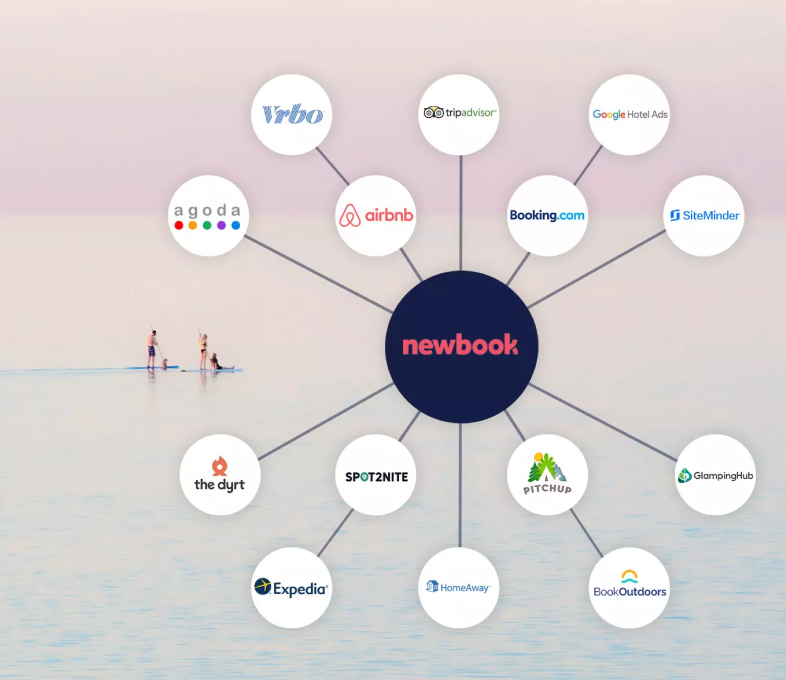
Listing your business online is a key way to increase your reach, allowing you to book more guests. Using a channel management system helps you organize your different listings effectively, allowing you to determine which ones net you the most reservations. OTAs work by charging accommodation providers a percentage fee per successful booking, so it’s always a best practice to list with many OTAs at first and then use the statistics provided by your channel manager to determine which ones are worth the fees and which ones are not.
The problem with many channel managers is that they limit the number of OTAs that you can list with or limit you to big providers like Airbnb or VRBO. In addition, some channel management software charges you for listing more than one property.
With Newbook, you can list as many properties with as many OTAs as you’d like for no extra cost through the channel management software that’s built into the PMS. This is fantastic, but if you list with a wide range of OTAs, manually managing each of these listings quickly becomes a chore. Thankfully, Newbook also allows automation with regard to managing your listings so that you only need to make changes to a single listing to have it globally updated to all the other OTAs you list with. This means that you save a ton of time by eliminating repetitive manual management, and allows you to increase the reach of your accommodation business without hassle.
Newbook is your all in one property management software. Talk to us today to learn how you can inprove operations and increase bookings for your business.More bookings, more often with our built in channel manager
Benefits of Property Management Automation Software

As the demand for seamless operations continues to rise, property automation software emerges as an indispensable tool for modern property managers. From streamlining workflows to enhancing financial management, this technology offers a ton of benefits that revolutionize the way properties are managed. The advantages of property automation software are discussed in more detail below, and the table summarizes each point for easy reading.
| Automation Software for Property Management Benefit | Summary |
| Reduces human error | Property automation software reduces mistakes by automating routine tasks like data entry and maintenance scheduling, ensuring precision and boosting operational efficiency. |
| Staff cost savings | By automating tasks such as payment collection and guest communication, property automation software optimizes workforce allocation, leading to greater efficiency and reduced labor expenses. |
| Seamless workflows | Automation software centralizes property management processes, streamlining tasks from guest management to maintenance requests, resulting in faster decision-making and increased productivity. |
| Automatic payment collection | Automation software enables automatic payment collection, improving cash flow predictability and reducing the administrative burden associated with manual rent collection. |
| Scalability and growth | Automation software is scalable and adaptable, accommodating the increasing workload and complexity of growing property portfolios. |
| Communication and collaboration | Property automation software facilitates seamless communication and collaboration among team members, vendors, and stakeholders, improving efficiency and reducing miscommunication. |
| Data-driven decision-making | Automation software analyzes property performance data, enabling informed decisions on pricing strategies, marketing campaigns, and investments, leading to greater profitability and competitive advantage. |
| Improves the guest experience | Automation software enhances the guest experience through streamlined booking processes and personalized communications, ensuring satisfaction and positive reviews. |
| Enhances consistency | Automation software standardizes processes and enforces rules, ensuring consistent handling of tasks and interactions, which fosters trust and reliability among tenants and stakeholders. |
| Regulatory compliance and risk management | Automation software helps property managers stay compliant with regulations by automating compliance checks and generating audit trails while also mitigating risks associated with maintenance and liability issues. |
-
Helps Eliminate Human Error
One of the most significant benefits of property automation software is its ability to reduce human error. Manual processes are prone to mistakes, whether it’s data entry errors or overlooking critical details. With automation, routine tasks such as data entry, scheduling maintenance, or tracking tenant requests are executed with precision, minimizing the risk of errors. By automating repetitive tasks, property managers can ensure accuracy across various operations, leading to higher tenant satisfaction and operational efficiency.
-
Saves on Staffing Costs
Property automation software can significantly reduce staffing costs by streamlining processes that would otherwise require manual intervention. By automating tasks such as payment collection, maintenance scheduling, and guest communication, property managers can optimize their workforce and allocate resources more effectively. This not only reduces labor expenses but also allows staff to focus on higher-value activities such as guest relations and strategic planning. As a result, property management companies can achieve greater operational efficiency while maintaining a lean workforce.
-
Helps Facilitate Seamless Workflows
Efficient workflows are essential for managing properties effectively. Property automation software facilitates seamless workflows by automating repetitive tasks and centralizing essential processes. From guest management to maintenance requests, all aspects of property management can be streamlined within a single platform, eliminating the need for multiple disjointed systems. This seamless integration ensures that information flows smoothly between different departments, enabling faster decision-making and enhancing overall productivity.
-
Allows for Automatic Payment Collection
Automating payment collection is a game-changer for property managers and landlords. Property automation software enables automatic payment collection, allowing long-term guests to set up recurring payments through various channels such as ACH transfers or credit card payments. This not only improves cash flow predictability but also reduces the administrative burden associated with manual rent collection. Additionally, automated reminders can be sent to guests for overdue payments, minimizing the occurrence of late payments and improving overall revenue management.
-
Supports Scalability and Growth
Automation software is highly scalable and adaptable to the needs of growing property portfolios. Whether managing a single property or multiple properties across different locations, automation software can accommodate increasing workload and complexity without compromising efficiency. As property management companies expand their operations, automation software provides the flexibility and scalability needed to support their growth trajectory.
-
Enhances Communication and Collaboration
Property management automation software helps facilitate seamless communication and collaboration among team members, vendors, and stakeholders. Through centralized communication channels and task management features, team members can easily collaborate on projects, share important updates, and coordinate tasks in real time. This improves efficiency, reduces miscommunication, and ensures that everyone is on the same page, ultimately leading to smoother operations and better outcomes.
-
Aids in Data-Driven Decision-Making
Automation software collects and analyzes vast amounts of data related to property performance, guest preferences, and market trends. By harnessing the power of data analytics, property managers can make informed decisions regarding pricing strategies, marketing campaigns, and property investments. Real-time insights enable managers to identify trends, predict future demand, and optimize resource allocation, ultimately driving profitability and competitive advantage.
-
Helps Improve the Guest Experience
Property automation software plays a crucial role in enhancing the guest experience throughout their stay. From streamlined reservation management to personalized guest communications, automation software ensures that guests receive the attention and service they deserve. Features such as self-check-in/out, mobile key access, and concierge services enable guests to enjoy a seamless and hassle-free experience, leading to higher satisfaction levels and positive reviews.
-
Ensures Consistency
Consistency is key to delivering exceptional property management services. Property automation software ensures consistency by standardizing processes and enforcing predefined rules and protocols. Whether it’s enforcing lease terms, implementing maintenance procedures, or handling tenant inquiries, automation ensures that every interaction is handled consistently and in accordance with established guidelines. This consistency not only enhances operational efficiency but also fosters trust and reliability among tenants and stakeholders.
-
Helps With Regulatory Compliance and Risk Management
Property management involves navigating a complex landscape of regulations, codes, and compliance requirements. Automation software helps property managers stay compliant with relevant laws and regulations by automating compliance checks, generating audit trails, and maintaining accurate records. Additionally, automation software can mitigate risks associated with property maintenance, guest or tenant disputes, and liability issues by proactively identifying potential issues and implementing preventive measures, thereby safeguarding the interests of property owners and investors.
Trends in Property Management Automation

Although technologies like machine learning and artificial intelligence have been around for quite a while, it’s only been recently that they’ve become a mainstream solution for many business owners, accommodation providers included. Although automation traditionally hasn’t included machine learning and artificial intelligence, modern property management automation often utilizes these to boost the functionality they can provide, offering more complex and robust automations.
Some current trends in hospitality management automation are discussed in more detail below:
Fintech Automation
Fintech automation has become increasingly prevalent in property management, offering accommodation providers advanced tools to streamline financial processes and enhance revenue management. From online payment platforms to digital invoicing systems, fintech automation solutions enable seamless transaction processing, reducing manual errors and improving cash flow predictability.
 Accommodation providers can leverage automated payment reminders and recurring billing features to ensure timely payments from guests while also simplifying accounting tasks such as reconciliations and reporting. Additionally, fintech automation solutions often integrate with PMS and accounting software, enabling seamless data synchronization and providing comprehensive insights into financial performance.
Automated Messaging
Communication is key to delivering exceptional guest experiences. Automated messaging platforms empower accommodation providers to engage with guests at every stage of their journey, from booking confirmation to post-stay feedback. Automated messaging can be used to send personalized welcome messages, provide important pre-arrival information, and deliver timely updates during the guest’s stay.
 By leveraging guest data and preferences, accommodation providers can tailor messages to individual preferences, enhancing guest satisfaction and fostering loyalty. Automated messaging platforms also often support multi-channel communication, including email, SMS, and messaging apps, ensuring that guests receive information through their preferred channels.
Newbook includes a built-in automated messaging system that can be used for marketing purposes, reminders, and general communication with guests.
Remote Management with Integrations
Remote management capabilities have become increasingly important for accommodation providers, particularly in light of evolving travel trends and the rise of remote work. Integration with smart home devices and IoT (Internet of Things) technology enables accommodation providers to remotely monitor and control property amenities, such as thermostats, lighting, and security systems, from anywhere in the world.
 This not only enhances operational efficiency but also allows accommodation providers to offer a seamless and secure guest experience. Integrations with property management systems, channel managers, and booking platforms enable real-time data synchronization, facilitating dynamic pricing strategies, inventory management, and distribution optimization.
Email and SMS
Email and SMS communications remain indispensable tools for accommodation providers seeking to engage with guests and drive repeat bookings. Automated email campaigns can be used to nurture guest relationships, promote special offers, and gather feedback post-stay.
Similarly,  to deliver time-sensitive information, such as check-in instructions or booking confirmations, directly to guests’ mobile devices. By leveraging automation tools, accommodation providers can ensure that communications are timely, relevant, and personalized, enhancing guest satisfaction and driving retention.
AI-Powered Chatbots for Guest Services
AI-powered chatbots are increasingly being integrated into property management systems to enhance guest services and support.
 These chatbots can handle common guest inquiries, such as booking inquiries, amenity requests, and FAQs, providing immediate responses and freeing up staff time for more complex tasks. With advancements in natural language processing (NLP) and machine learning, chatbots can deliver personalized interactions, learn from guest interactions over time, and continuously improve their accuracy and efficiency.
Predictive Analytics for Demand Forecasting
Predictive analytics tools are being utilized by accommodation providers to forecast demand, optimize pricing strategies, and maximize revenue. By analyzing historical booking data, market trends, and external factors such as weather and events, predictive analytics algorithms can forecast future demand patterns with greater accuracy.
 This technology is called dynamic pricing and is one of the core features of Newbook’s built-in revenue management system. Dynamic pricing enables accommodation providers to adjust pricing dynamically, allocate inventory effectively, and capitalize on revenue opportunities, ultimately driving higher profitability and occupancy rates.
Smart Access Control Systems

Smart access control systems are becoming increasingly popular in property management automation, offering enhanced security, convenience, and operational efficiency. These systems leverage technologies such as biometrics, RFID, and mobile credentials to provide secure access to properties and amenities. Accommodation providers can remotely manage access permissions, track entry, and exit logs in real time, and grant temporary access to guests or staff as needed. Smart access control systems not only improve security but also streamline check-in processes, reduce administrative overhead, and enhance the overall guest experience.
A great example of smart access control with remote management in action can be demonstrated using Newbook’s PMS. One integration, Wild Energy, allows accommodation providers to track power consumption as soon as a guest checks in to their powered campsite with the click of a button. Similarly, when the guest checks out, the button is pressed again to stop the meter reading. The whole process only takes a few seconds, making tracking extremely easy. Without this technology in place, someone would have to physically visit the campsite and turn on the power.
That means contacting a staff member who knows how to turn the power on and giving them time to get to the campsite to activate the switch. When you multiply this by tens or hundreds of campsites, it’s easy to see how time-consuming this process can be. Plus, human error comes into play, with the potential for campsites being missed, further adding to the time it takes to get sites ready for guests once they check-in.
Newbook is your all in one online booking system. Talk to us today to learn how you can improve operations and increase booking for your business.Your all-in-one, online booking system
How Revenue Management Systems (RMS) Relates to Effective Property Management

In today’s competitive property management landscape, maximizing revenue is crucial for success. Property managers need to implement strategies that optimize pricing, leverage revenue metrics, and accurately forecast demand to stay ahead of the curve. Property management systems play a pivotal role in achieving these objectives, empowering property managers with data-driven insights and dynamic pricing capabilities.
-
Dynamic Pricing
Dynamic pricing is a cornerstone of revenue management, enabling property managers to adjust prices in real time based on supply, demand, and market conditions. Hotel revenue management solutions utilize advanced algorithms and historical data analysis to set optimal prices that maximize revenue while maintaining competitiveness. By dynamically adjusting prices based on factors such as occupancy levels, seasonality, and competitor rates, property managers can capture revenue opportunities and optimize yield across various booking channels. Dynamic pricing is an effective hospitality technology that not only increases revenue potential but also enhances guest satisfaction by offering competitive rates that reflect market demand.
-
Revenue Metrics
Effective revenue management relies on actionable insights derived from revenue metrics. Revenue management software provides property managers with comprehensive data analytics and performance metrics that help monitor key revenue indicators such as Average Daily Rate (ADR), Revenue per Available Room (RevPAR), and Occupancy Rate. By analyzing these metrics over time, property managers can identify trends, assess performance against targets, and make data-driven decisions to optimize revenue. Revenue metrics also enable benchmarking against industry standards and competitors, providing valuable insights into market positioning and pricing strategies.
-
Forecasting
Accurate demand forecasting is essential for optimizing pricing and inventory management. Revenue management software utilizes advanced forecasting models and predictive analytics to anticipate future demand patterns and adjust pricing strategies accordingly. By analyzing historical booking data, market trends, and external factors such as events and holidays, revenue management software can generate accurate demand forecasts for different time periods and room types. This enables property managers to proactively adjust prices, allocate inventory, and implement targeted promotions to capitalize on revenue opportunities. Accurate forecasting also minimizes the risk of overbooking or underutilization, ensuring optimal revenue generation and operational efficiency.
-
Dynamic Inventory Management
In addition to dynamic pricing, revenue management systems facilitate dynamic inventory management, allowing property managers to optimize room availability and allocation. By analyzing booking patterns, cancellation rates, and historical data, revenue management software helps property managers identify opportunities to maximize occupancy and revenue. Through real-time inventory updates and automated inventory controls, property managers can strategically adjust room availability, implement minimum length of stay restrictions, and allocate inventory to different distribution channels. Dynamic inventory management ensures that inventory is efficiently utilized, minimizing the risk of overbooking or underutilization while maximizing revenue potential.
-
Integration and Scalability
Effective property management requires seamless integration with other software and scalability to accommodate evolving business needs. Revenue management software offers integration capabilities with property management systems (PMS), channel managers, and booking platforms, enabling seamless data synchronization and streamlining operations. Integration with revenue management software allows property managers to access real-time data, automate pricing updates, and optimize distribution strategies across multiple channels. Revenue management system solutions are also scalable, allowing property managers to expand their operations and adapt to changing market dynamics without compromising performance. Whether managing a single property or a large portfolio, revenue management systems provide the flexibility and scalability needed to support growth and drive revenue optimization.
Boost Revenue With a Fully-Featured Booking Engine

We get it. These days, it seems like online travel agencies have the upper hand when it comes to securing bookings. In fact, Booking Holdings and Expedia Group, which are both among the largest online travel agencies, account for around 60% of all travel bookings in North America and Europe. Airbnb, on the other hand, offers around seven million short-term rental options. If you’re a small hospitality business just trying to reach as many people in your target market as possible, it might seem like only listing on these OTAs is a better use of your time and money over investing in a direct booking engine, also known as reservation management software. But the truth is, it’s still very lucrative to provide your guests with a way to book with you directly online:
- While OTAs are the dominant online booking platforms, a growing trend is seeing hotels or direct-to-consumer channels increasing their share of direct bookings. For example, according to a survey by Phocuswright, hotels’ online direct bookings increased from 49% before the pandemic to 52% in the first quarter of 2023.
- Another study by Statista on bookings showed that in 2022, 43% of travelers booked internationally with an OTA and 17% directly with a hotel.
Direct hotel bookings may be more appealing to customers who value personal, tailored travel experiences. Besides, hotels may also prefer to deal directly with their customers rather than paying a commission to OTAs for each booking. Travel agencies may still be useful for time-strapped individuals who need immediate travel plans or want additional services like flight and rental car bookings. On the other hand, direct bookings may offer more transparency and pricing flexibility, allowing customers to make better-informed decisions. The billboard effect, is a well-known phenomenon that describes how a potential guest will visit an OTA to research accommodations and then end up booking directly with you.
In addition, direct bookings allow accommodation providers to offer their guests more incentives to book directly, such as special promotions, VIP, and referral programs. Robust reservation management software, like the one offered through Newbook, can also offer tailored features that make booking with you easier for your guests. For example, Newbook’s booking engine offers:
- The ability for guests to extend or shorten their stay based on the minimum and maximum number of nights available for the campsite or room. They can do this through the booking engine without having to contact a customer service representative.
- Included interactive maps allow your guests to choose their preferred campsite or room based on location, including view, access to amenities, and more.
- The booking engine can be customized with your company logo and colors, ensuring that your guests get a seamless experience when they click on the “book now” button on your website and aren’t presented with a completely different interface.
Unlock our expert tips to optimize your digital strategy through OTAs and social media, and boost conversions on your direct booking engine.eBook: Optimize Online Presence & Convert More Bookings

Cross-selling vs upselling
A direct booking engine can also significantly increase your upsells and cross-sells by presenting options to your guests without being too pushy or salesy. Let’s start by breaking down the definition of cross-selling vs. upselling:
| Cross-sell Definition | Upsell Definition |
| Upselling entails enticing guests to invest in a product or service of greater value than their original intention. This involves prompting guests to enhance their selections or incorporate premium amenities into their current reservations. | Cross-selling is the practice of suggesting related or complementary products or services to guests tailored to their current purchases or preferences. It entails presenting additional options that complement the guest’s primary selection. |
Benefits of Cross-Selling
Cross-selling offers several benefits for accommodation providers, enhancing guest experiences and boosting revenue streams:
- Increased revenue: Cross-selling allows accommodation providers to generate additional revenue by promoting complementary products or services to guests. By offering upgrades, add-ons, or ancillary services, providers can capitalize on existing bookings and increase the average spend per guest.
- Enhanced guest experience: By recommending related products or services that align with guests’ needs or preferences, accommodation providers can enhance the overall guest experience. Cross-selling enables providers to anticipate and fulfill guests’ desires, contributing to greater satisfaction and loyalty.
- Maximized occupancy: Cross-selling enables accommodation providers to maximize occupancy rates by promoting additional services or amenities to guests. For example, offering room upgrades or package deals can help fill unused inventory and optimize revenue potential, particularly during off-peak periods.
- Improved customer engagement: Cross-selling initiatives provide opportunities for accommodation providers to engage with guests and build stronger relationships. By understanding guests’ preferences and offering tailored recommendations, providers can foster positive interactions and encourage repeat business.
- Diversified revenue streams: By diversifying their revenue streams through cross-selling, accommodation providers can reduce reliance on room revenue alone. Offering supplementary services such as spa treatments, dining options, or recreational activities allows providers to capture additional revenue from guests’ discretionary spending.
- Competitive advantage: Effective cross-selling strategies can give accommodation providers a competitive edge in the market. By offering a comprehensive range of products and services that meet guests’ needs, providers can differentiate themselves from competitors and attract more bookings.
- Enhanced brand loyalty: By providing guests with value-added services and personalized recommendations, accommodation providers can cultivate stronger brand loyalty. Guests who have positive cross-selling experiences are more likely to return in the future and recommend the property to others, contributing to long-term success.
Benefits of Upselling
Like Cross-selling, upselling provides numerous advantages for accommodation providers, contributing to increased revenue and enhanced guest experiences:
- Revenue boost: The primary benefit of upselling for accommodation providers is the potential for increased revenue. By persuading guests to upgrade their bookings or add premium services, providers can capitalize on opportunities to generate additional income beyond the base room rate.
- Profit margins: Upselling premium services or room upgrades often comes with higher profit margins compared to standard room rates. This allows accommodation providers to maximize profitability and optimize revenue streams.
- Enhanced guest experience: Upselling enables accommodation providers to offer guests an enhanced experience by providing access to superior room categories, amenities, or services. This can lead to greater guest satisfaction, positive reviews, and increased likelihood of repeat bookings.
- Personalized service: Through upselling, accommodation providers can tailor their offerings to meet the specific preferences and needs of individual guests. By recommending relevant upgrades or amenities, providers demonstrate a commitment to delivering personalized service and exceeding guest expectations.
- Competitive advantage: Effective upselling strategies can give accommodation providers a competitive edge in the market. By offering enticing upgrades or value-added services, providers differentiate themselves from competitors and attract guests seeking a premium experience.
- Revenue diversification: Upselling allows accommodation providers to diversify their revenue streams beyond room bookings. By promoting additional services such as spa treatments, dining experiences, or recreational activities, providers can capture additional revenue from guests’ discretionary spending.
- Maximized Occupancy and Revenue Per Available Room (RevPAR): Upselling can help accommodation providers optimize occupancy rates and increase Revenue Per Available Room (RevPAR). By encouraging guests to upgrade their bookings, providers can fill higher-tier rooms and maximize revenue potential.
- Brand loyalty and repeat business: Providing guests with opportunities to enhance their stay through upselling can foster greater brand loyalty and encourage repeat business. Guests who have positive upselling experiences are more likely to return to the property in the future and recommend it to others.
Frequently Asked Questions

Property management software has a lot of features and functionality, which we may only have touched on in this article. Here are some commonly asked questions regarding property management software, along with answers:
-
How does property management software handle data security?
Property management software typically employs robust security measures to protect sensitive data. These measures may include encryption protocols to secure data transmission, access controls to limit who can view or modify data, and regular security audits to identify and address vulnerabilities. Additionally, reputable property management software providers comply with industry standards and regulations, such as GDPR or HIPAA, depending on the type of data being managed. Regular updates and patches are also crucial to ensure that the software remains protected against emerging security threats.
For example, Newbook invests in world-class infrastructure and data hosting via Amazon Web Services. All data with Newbook is hosted in the USA. Newbook also partners with leaders in encryption, threat anomaly, penetration testing, and more.
-
What are the pricing plans and associated costs for using property management software?
Pricing for property management software can vary widely depending on factors such as the size of the property portfolio, the number of users, and the features included in the software package. Most providers offer tiered pricing plans with different levels of functionality to accommodate the needs of various users. Pricing may be structured as a monthly or annual subscription fee, with additional costs for optional add-ons or premium features. Some providers may also charge implementation fees for onboarding and training, as well as ongoing support fees for technical assistance and customer service.
-
How customizable is property management software?
Property management software often offers a degree of customization to adapt to the unique needs of different properties and users. This may include customizable templates for lease agreements, invoices, and reports, as well as the ability to configure workflows and automate processes according to specific requirements. Some software providers offer API access or integration capabilities, allowing users to connect with third-party systems or develop custom integrations to extend the functionality of the software. While the level of customization may vary between providers, most modern property management software solutions strive to offer flexibility and adaptability to meet the diverse needs of users.
-
How does property management software handle maintenance requests and track property maintenance schedules?
Property management software typically includes features to streamline the handling of maintenance requests and track maintenance schedules. Tenants can submit maintenance requests through an online portal or mobile app, which are then automatically routed to the appropriate personnel for action. Property managers can prioritize and assign tasks, schedule maintenance appointments, and track the status of work orders in real time. Additionally, maintenance schedules can be set up for routine inspections, preventive maintenance tasks, and recurring services, with automated reminders to ensure that maintenance activities are completed on time and according to schedule.
-
Can property management software generate reports and analytics data to track property performance and revenue?
Property management software often includes robust reporting and analytics features to track property performance and revenue. Users can generate a variety of reports, including financial statements, occupancy reports, rent roll summaries, and maintenance history logs, to gain insights into key metrics and trends. These reports can be customized and filtered to focus on specific time periods, properties, or categories, allowing users to identify areas for improvement and make informed decisions to optimize property performance. Additionally, some software providers offer advanced analytics tools and predictive modeling capabilities to forecast future trends and support strategic planning initiatives.
-
What is the difference between single-tenant and multi-tenant software?
In the context of property management software, the difference between single-tenant and multi-tenant software lies in how the software architecture handles data and serves multiple users or tenants:
Single Tenant Software:
- Single-tenant software is designed to serve only one user or organization (i.e., tenant) at a time.
- Each user or organization using the software has its own instance or version of the software deployed exclusively for their use.
- Data is segregated and isolated between different tenants, meaning that each tenant has its own database, configuration settings, and customizations.
- Single-tenant software offers greater customization and control for each individual tenant, as they have exclusive access to their own instance of the software.
- However, single-tenant software can be more resource-intensive and costly to maintain, as each tenant requires separate infrastructure and support.
Multi-Tenant Software:
- Multi-tenant software is designed to serve multiple users or organizations (i.e., tenants) from a single shared instance of the software.
- All tenants share the same instance of the software application, database, and infrastructure.
- Data is typically partitioned within the database to ensure separation and security between different tenants while still allowing them to access the same application and resources.
- Multi-tenant software offers economies of scale, as resources are shared among multiple tenants, resulting in lower costs for infrastructure and maintenance.
- However, multi-tenant software may have limitations in terms of customization and control for individual tenants, as they share the same instance of the software with other users.
-
Is property management software scalable to accommodate the needs of small boutique hotels as well as large chain hotels?
Yes, property management software (PMS) is often designed to be scalable, catering to the needs of hotels of various sizes and types. Whether you’re running a small boutique hotel with a handful of rooms or managing a large chain hotel with hundreds of rooms across multiple locations, PMS solutions can typically scale to accommodate your requirements.For small boutique hotels, PMS systems offer simplified interfaces and essential features to manage reservations, guest profiles, and billing effectively without overwhelming complexity. These solutions are often more budget-friendly and require minimal setup and configuration.
On the other hand, PMS solutions for large chain hotels are equipped with advanced functionalities to handle high volumes of bookings, complex rate management, and multi-property operations. These systems may include features such as centralized inventory management, multi-location reporting, and enterprise-level integrations with other hotel systems.
Whether you’re a small boutique hotel or a large chain hotel, there’s likely a property management software solution tailored to your specific needs and budget, offering scalability to support your growth and operational requirements over time. It’s essential for hoteliers to evaluate their current and future needs carefully and choose a PMS provider that can scale alongside their business.
Final Takeaways on Property Management Software

Mastering property management software (PMS) is essential for accommodation providers aiming to excel in the competitive hospitality industry. PMS empowers businesses to optimize operations, enhance guest satisfaction, and drive sustainable growth. Over the years, PMS has evolved from basic computer-based systems to sophisticated cloud-based solutions, revolutionizing the way properties are managed.
By centralizing data, streamlining communication, and automating routine tasks, PMS enables accommodation providers to focus on delivering exceptional service and creating unforgettable guest experiences. Whether managing a boutique hotel, luxury resort, or campground, embracing PMS technology offers valuable insights and practical strategies to maximize efficiency and elevate hospitality offerings, ensuring success in the dynamic landscape of property management.
Get a PMS that will work with your campground, boutique hotel, large hotel chain, or glamping resort. Newbook is a comprehensive PMS that includes a revenue manager, channel manager, booking engine, self-service options, and much more.
Reach out to Newbook today for a demo or to have your burning questions about our software answered.
Newbook is your all in one online booking system. Talk to us today to learn how you can improve operations and increase booking for your business.Your all-in-one, online booking system