These days, guests love to book their accommodations online. The convenience of booking an entire trip, including flights, accommodations, and activities, with the click of a few buttons is unmatched. No more having to make reservations on the phone or book time off work to visit a travel agent in person; instead, guests are empowered to take full control over their vacation experience by using websites like Expedia or Booking.com.
This means that accommodation providers have to consider a few things to properly promote their business:
- They must list their property (or properties, if they own multiple accommodations) on third-party channel websites like the aforementioned Expedia or Booking.com, often called online travel agencies (shortened to OTAs) because they give the guest the opportunity to plan their entire vacation—from flights to accommodations to activities—in one seamless flow. Data suggests that the vast majority of people prefer to book their vacations online rather than meeting with a travel agent in person.
- They must prepare to pay a commission fee for successful bookings. After doing some research and looking at the different popular OTAs on the internet, most sites confirm that commission fees can range anywhere from 10% to 30%, depending on the OTA.
- They must find a way to keep track of bookings that are coming in from multiple sources to prevent dreaded double bookings.
The biggest problem lies with keeping track of bookings coming in from multiple sources. Not only do you have to keep track of these bookings, but you also have to make sure that your prices and availability dates are correct on each listing. So if a guest books on Expedia and then the next second a guest tries to book the same dates and room with you directly on your website, they’ll get a notification that their selected accommodations are no longer available and get some alternate suggestions.
As you can imagine, it quickly becomes impossible to do this manually, especially when you have multiple properties and hundreds of rooms, villas, or campsites to keep track of. Even a few minutes delay in manually updating availability once a successful booking comes in can result in a double booking. To further complicate matters, if you use a dynamic pricing strategy, then keeping your prices updated can also be next to impossible.
The solution is an automated room scheduling software that organizes your bookings in real-time and provides instant updates to all websites you list with. Room scheduling software can also take it a step further by automatically scheduling cleaning and maintenance tasks for booked rooms so that you can be sure that everything will be ready for your guests once they arrive.
How Room Scheduling Software Helps Hoteliers

By centralizing and automating these tasks, room scheduling software ensures that all aspects of room management are handled efficiently, reducing the risk of errors and maximizing room occupancy.
One key way room scheduling software helps hoteliers is by providing real-time updates on room availability and status. This ensures that front desk staff can accurately and quickly assign rooms to guests, avoiding issues like double bookings or overbookings. The software also integrates with online booking platforms and travel agencies, ensuring that room availability is updated across all channels in real time. This seamless integration helps in capturing more bookings and preventing revenue loss due to booking errors.
Room scheduling software improves communication and coordination among different departments within the hotel. Housekeeping staff receive real-time updates on room status, enabling them to prioritize cleaning tasks based on guest check-in and check-out times. Maintenance requests can be scheduled and tracked efficiently, ensuring that any issues are addressed promptly and do not disrupt guest stays. This level of coordination enhances operational efficiency and ensures a smooth and pleasant experience for guests.
Benefits of Software for Room Scheduling for Hotels
Implementing room scheduling software in hotels brings a host of benefits that streamline operations, enhance guest satisfaction, and boost revenue. Here is a detailed list of the key benefits:
1. Automation of Routine Tasks
Room scheduling software automates many routine tasks, such as booking management, housekeeping schedules, and maintenance tasks. This reduces the manual workload on staff and minimizes the risk of human error, ensuring smooth and efficient operations.
2. Real-Time Updates
Web-based room scheduling software provides real-time updates on room availability and status. This ensures that front desk staff can make accurate room assignments and avoid issues like double bookings or overbookings. Real-time updates also allow for quick responses to guest requests and changes.
3. Seamless Integration with OTAs
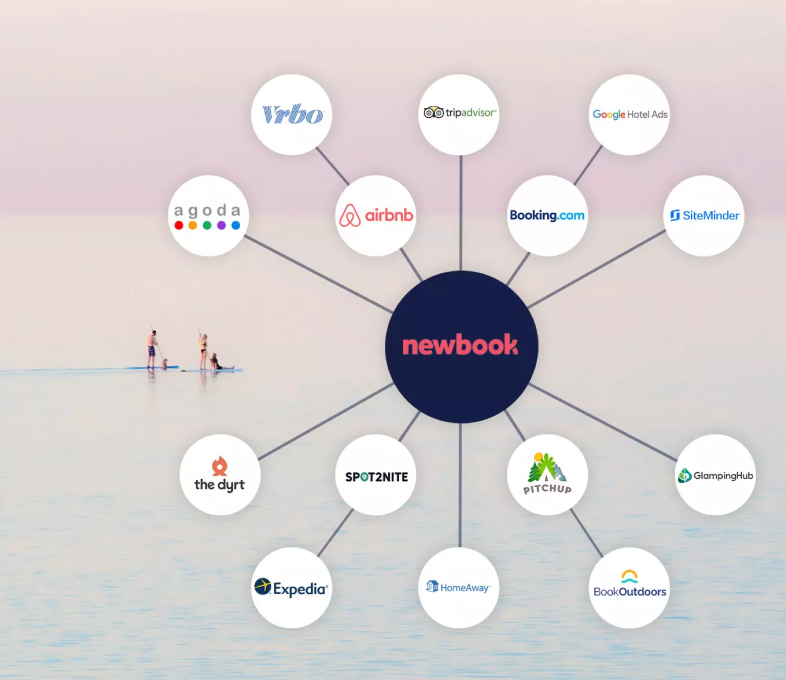
Room scheduling software integrates seamlessly with online travel agencies and other booking platforms. This ensures that room availability is consistently updated across all channels, maximizing exposure and capturing more bookings.
More bookings, more often with our built in channel manager
Newbook is your all in one property management software. Talk to us today to learn how you can inprove operations and increase bookings for your business.

4. Enhanced Coordination Among Departments
Web-based room scheduling software helps to improve communication and coordination among different hotel departments. Housekeeping and maintenance staff receive timely updates on room status, enabling them to prioritize tasks effectively. This ensures that rooms are always ready for guests, enhancing the overall guest experience.
5. Optimized Room Occupancy
Room scheduling software helps hoteliers implement effective revenue management strategies by providing insights into booking patterns and occupancy rates. This includes dynamic pricing, where room rates are adjusted based on demand, maximizing occupancy and revenue.
6. Improved Guest Satisfaction
Ensuring that rooms are clean, well-maintained, and ready on time enhances guest satisfaction. Web-based room scheduling software also allows for the management of guest preferences and special requests, providing a personalized experience that can lead to higher guest loyalty.
7. Efficient Resource Management
Room scheduling software helps in efficiently managing resources by automating staff schedules and tracking inventory levels. This reduces operational costs by ensuring that resources are used optimally and wastage is minimized.
8. Detailed Reporting and Analytics
Software for room scheduling generates detailed reports on various aspects of hotel operations, such as room occupancy, revenue, and staff performance. These reports provide valuable insights that help hotel managers make informed decisions and identify areas for improvement.
9. Increased Revenue
By optimizing room rates through dynamic pricing and identifying opportunities for upselling and cross-selling, room scheduling software helps increase overall revenue. This includes offering room upgrades or additional services to guests during the booking process or throughout their stay.
10. Enhanced Security and Compliance
The software ensures the security of guest data and compliance with data protection regulations. Role-based access controls and advanced encryption protect sensitive information, building guest trust and reducing the risk of data breaches.
11. Scalability and Flexibility
Room scheduling software is scalable and can be customized to meet the needs of hotels of all sizes, from small boutique hotels to large chains. This flexibility allows the system to grow and adapt as the business evolves.
12. Environmental Sustainability
By digitizing processes such as reservations and billing, room scheduling software reduces the need for paper-based hotel management operations. Additionally, efficient resource management helps in reducing waste and optimizing energy usage, contributing to the hotel’s sustainability efforts.
How Hotel Room Scheduling Software Can Help Improve Bookings

Hotel room scheduling software plays a crucial role in enhancing bookings by optimizing the reservation process, ensuring efficient room management, and enabling effective marketing strategies. Here are some key ways in which this software can significantly improve bookings:
1. Real-Time Availability and Synchronization
Room scheduling software provides real-time updates on room availability and status, ensuring that all booking channels, including the hotel’s website and online travel agencies (OTAs) like Expedia and Booking.com, are always in sync. This prevents double bookings and ensures that potential guests have accurate information about available rooms, thereby increasing the likelihood of successful reservations.
2. Seamless Integration with OTAs
Room scheduling software expands a hotel’s reach to a broader audience by seamlessly integrating with multiple OTAs. This integration ensures that room availability and rates are consistently updated across all platforms, maximizing exposure and capturing more bookings from various sources.
3. Enhanced Direct Booking Capabilities
The software includes a powerful booking engine that can be integrated directly into the hotel’s website. This feature encourages direct bookings, which typically have lower commission costs compared to those made through OTAs. Direct booking capabilities provide a user-friendly experience for guests, allowing them to easily check availability, make reservations, and receive instant confirmations.
4. Dynamic Pricing and Revenue Management
Room scheduling software helps implement dynamic pricing strategies by analyzing booking patterns, demand, and market conditions. This enables hotels to adjust room rates in real time to optimize revenue. By offering competitive rates and special promotions during peak and off-peak periods, hotels can attract more guests and increase bookings.
5. Personalized Marketing and Promotions
The software integrates with customer relationship management (CRM) systems, allowing hotels to gather and analyze guest data. This information can be used to create personalized marketing campaigns and promotions that target specific guest segments based on their preferences and booking history. Personalized offers and targeted promotions increase the chances of repeat bookings and attract new guests.
6. Improved Guest Experience
Ensuring that rooms are clean, well-maintained, and ready on time enhances the overall guest experience. Room scheduling software facilitates efficient housekeeping and maintenance scheduling, ensuring that rooms are always in top condition. Satisfied guests are more likely to leave positive reviews and recommend the hotel to others, which can lead to an increase in bookings.
7. Efficient Management of Group Bookings
The software simplifies the management of group bookings by automating the allocation of rooms and handling special requests. This is particularly beneficial for events, conferences, and group travel, where managing multiple reservations can be complex. Efficient handling of group bookings enhances the hotel’s reputation as a reliable venue for large gatherings, attracting more group reservations.
8. Enhanced Communication and Engagement
Room scheduling software facilitates efficient communication with guests before, during, and after their stay. Automated emails and SMS can be used to confirm bookings, send reminders, offer special deals, and request feedback. Effective communication enhances guest satisfaction and encourages repeat bookings.
9. Analytics and Reporting
The software provides detailed analytics and reporting on booking trends, occupancy rates, and guest behavior. This data helps hotel managers understand their market better, identify areas for improvement, and develop strategies to boost bookings. By leveraging these insights, hotels can make informed decisions that enhance their competitiveness and appeal.
10. Mobile Accessibility
With the increasing use of mobile devices for travel planning and booking, room scheduling software often includes mobile-friendly features and apps. This allows guests to book rooms, check availability, and manage their reservations conveniently from their smartphones or tablets, making the booking process more accessible and appealing.
What to Consider When Looking for the Best Room Scheduling Software for Hotels

Choosing the right room scheduling software for your hotel is a critical decision that can significantly impact your hotel’s management, operations, guest satisfaction, and revenue. Here are key factors to consider when evaluating options:
| Consideration in Choosing the Best Room Scheduling Software | Insight |
|---|---|
| Ease of use | -The software should be designed with a user-friendly interface that allows staff to quickly learn and use it effectively. Intuitive navigation and clear instructions are essential to minimize training time and ensure smooth daily operations. |
| Integration capabilities | -Integration with other essential systems, such as property management systems, OTAs, and CRM tools, is crucial. Seamless integration ensures that data flows smoothly between different platforms, reducing manual data entry and minimizing errors. View Newbook’s comprehensive integrations store. |
| Automation features | -Automation can significantly improve efficiency by handling routine tasks such as booking management, housekeeping schedules, and maintenance requests. Automated notifications and reminders help ensure that tasks are completed on time and that guests receive timely updates. |
| Real-time updates | -Real-time updates are vital to maintaining accurate room availability and status information. This helps prevent double bookings and ensures that staff can make informed decisions quickly. Real-time updates also enhance the guest experience by providing accurate information during the booking process. |
| Reporting and analytics functionality | -Robust reporting and analytics features allow hotel managers to track performance metrics, understand trends, and make data-driven decisions. Detailed reports on occupancy rates, revenue, guest feedback, and other key metrics are essential for effective management. |
| Mobile experience | -Mobile access is increasingly important for both staff and guests. Staff can manage bookings, check room status, and handle maintenance requests on the go, while guests can make reservations, check-in, and request services via mobile apps. |
| Scalability | -Choose software that can grow with your hotel. Scalability ensures that the software can accommodate increased bookings, additional properties, and new features as your business expands. |
| Customer support | -Reliable customer support is crucial for resolving issues promptly and ensuring smooth operation. Look for software providers that offer 24/7 support, comprehensive training resources, and a responsive support team. |
| Cost | -Consider the total cost of ownership, including initial software costs, subscription fees, and any additional charges for integrations, support, and upgrades. Ensure that the software provides good value for money and fits within your budget. |
| Security | -Security is paramount when handling guest information and financial data. Ensure that the software complies with data protection regulations and includes features such as encryption, access controls, and regular security updates. |
So you manage a hotel? We make it easy
Newbook is your all in one hotel management software. Talk to us today to learn how you can improve operations and increase bookings for your hotel.

Difference Between Hotel Room Scheduling Software Open Source and Free Software
When selecting hotel room scheduling software, it’s important to understand the differences between open source and free software. Each type offers distinct advantages and potential drawbacks, and the right choice will depend on your specific needs and resources. Here’s an overview of the key differences:
Open Source Software
Open source software provides access to its source code, allowing users to modify and customize the software to meet their specific needs. It typically requires more technical expertise to implement and maintain but offers greater flexibility and control.
Advantages
- Customization: Full access to the source code allows for extensive customization to tailor the software to specific needs.
- Transparency: Users can inspect the code to ensure there are no hidden features or vulnerabilities.
- Community support: Often supported by a community of developers who contribute to improvements and provide support.
Drawbacks
- Technical expertise required: Implementation and maintenance require a higher level of technical knowledge.
- No official support: While community support is available, it may lack the reliability and consistency of official support services.
- Initial setup: Can be more time-consuming to set up and configure.
Free Software
Free software is available at no cost and is typically ready to use without the need for extensive customization or technical expertise. However, it may have limitations in terms of features, support, or scalability.
Advantages
- Cost: No upfront cost, making it accessible for small hotels or those with limited budgets.
- Ease of use: Designed to be user-friendly with minimal setup required.
- Official support: Often comes with limited official support and documentation.
Drawbacks
- Limited features: May lack advanced features or customization options.
- Scalability issues: Free versions may not scale well with growing businesses.
- Dependency on the provider: Reliance on the provider for updates and support, which may be limited in the free version.
To summarize the differences between open-source and free software, refer to the table below:
| Feature | Open Source Software | Free Software |
|---|---|---|
| Cost | -Generally free to use, but customization may incur costs | -Completely free but may have limitations in features |
| Customization | -High, with full access to source code | -Low, often has limited customization options |
| Technical Expertise | -Required for implementation and maintenance | -Minimal—designed for ease of use |
| Support | -Community-based support, no official support | -Limited official support, often with paid upgrades |
| Features | -Extensive, based on customization | -Basic to moderate, depending on the software |
| Scalability | -High—can be modified to scale as needed | -Limited—may require an upgrade to a paid version for scalability |
| Security | -High—code can be reviewed for vulnerabilities | -Dependent on the provider’s updates and policies |
| Initial Setup | -More complex and time-consuming | -Quick and easy setup |
Why You Shouldn’t Opt for Free Room Scheduling Software
While room scheduling software free may initially seem like an attractive option for cost-conscious hoteliers, there are several reasons why it might not be the best choice for your business in the long run. Here are some key drawbacks to consider:
1. Limited Features and Functionality
Free room scheduling software often comes with restricted features, which can limit your ability to manage your hotel efficiently. Essential functionalities such as advanced reporting, integration with other systems (like PMS, OTAs, and CRM tools), and automation of routine tasks might be unavailable or require additional payments to unlock.
2. Scalability Issues
As your hotel grows, your scheduling needs will become more complex. Free software solutions may not be able to scale to accommodate a larger number of rooms, increased bookings, or more advanced management requirements. This can result in the need to switch to a more robust solution later, which can be costly and time-consuming.
3. Lack of Customization
Free software typically offers limited customization options, meaning you might have to adapt your processes to fit the software rather than the other way around. This lack of flexibility can hinder your ability to provide a personalized guest experience and optimize your operations.
4. Reliability and Support
Free software often comes with limited customer support. If you encounter technical issues or need assistance, you might not receive the timely and comprehensive help you need. This can lead to operational disruptions and a negative impact on guest satisfaction.
5. Data Security Concerns
Data security is critical in the hospitality industry, where sensitive guest information is handled regularly. Free software solutions may not offer robust security features, leaving your hotel vulnerable to data breaches and compliance issues. Investing in a secure, paid solution ensures better protection of your guests’ data and your reputation.
6. Hidden Costs
While the software itself may be free, there can be hidden costs associated with its use. These can include charges for additional features, premium support, or necessary integrations. Over time, these costs can add up, potentially exceeding the price of a more comprehensive paid solution.
7. Integration Limitations
Free room scheduling software might not integrate well with other essential systems you use, such as property management systems, point of sale systems, and online travel agencies. This lack of integration can lead to inefficiencies, manual data entry, and increased risk of errors.
8. Performance and Reliability
Free software solutions may not receive regular updates or maintenance, leading to performance issues and downtime. This can affect your ability to manage bookings effectively and provide a seamless experience for your guests.
Newbook as Your Room Scheduling Software Solution

With thousands of potential room scheduling software options online to choose from, you’ll need to decide whether you want an all-in-one software package that only offers room scheduling or multiple specialized tools for tasks like customer management, accounting, billing, invoicing, inventory management, and more in one solution.
Pros and Cons of All-in-One vs. Stand-Alone Software
- All-in-One Software: This type of software offers a comprehensive solution that handles everything, but the built-in features may not be as robust as those offered by specialized stand-alone solutions.
- Stand-Alone Software: While stand-alone software can provide more robust features, integrating these with a centralized system can be challenging, often leading to isolated information. Additionally, training staff on multiple systems can be time-consuming and costly, and not all staff may become proficient in every system.
Newbook understands the importance of having centralized and accessible information for the successful management of an accommodation business. Without democratized access to critical data, business operations can face bottlenecks that negatively impact customer service, inventory management, maintenance, and cleaning tasks.
Newbook provides a comprehensive centralized system to effectively manage your business, including:
- Property Management Software (PMS) is the core of your business, offering all the tools needed to manage resort operations and customer interactions.
- Channel Manager: Listing with OTAs is essential to expanding your reach and attracting more customers. Newbook’s channel manager syncs your rates and inventory in real-time across all platforms, eliminating the need for manual updates.
- Online Booking System: An intuitive and comprehensive booking system is crucial for securing direct bookings on your website. Our booking engine includes features like interactive maps, upselling options during the booking process, and recommendations for alternative dates if the chosen dates are unavailable.
- Centralized Reservation System: This system ensures that all reservations, whether direct or from an OTA, are managed in one place for easy oversight.
- Self-Service Kiosks: Allow guests to check in or out at their convenience, reducing the need for 24/7 front desk staffing.
- Key Cafe: Ideal for resorts with cabins or villas, this feature lets guests retrieve their accommodation keys at any time.
Recognizing that all-in-one solutions might need additional enhancements to meet resort owners’ specific needs, Newbook offers hundreds of easy-to-implement integrations with popular hotel and resort software, including revenue management, analytics and reporting, payment gateways, phone systems, point of sale, and business intelligence tools.
By choosing Newbook as your resort management solution, you gain a powerful, reliable, and user-friendly system that enhances efficiency, guest satisfaction, and overall business performance.
Your all-in-one, online booking system
Newbook is your all in one online booking system. Talk to us today to learn how you can improve operations and increase booking for your business.

Conclusion
Implementing room scheduling software in your hotel is no longer optional but a necessity. With the modern traveler preferring online bookings through platforms like Expedia and Booking.com, hoteliers must adapt to stay competitive. This involves not only listing properties on multiple OTAs to maximize reach but also efficiently managing these listings to avoid double bookings and ensure accurate pricing.
With Newbook, you not only get top-tier room scheduling software but also a partner dedicated to your success. Our 99.99% uptime guarantee, extensive integration options, and exceptional customer service make us the ideal choice for hoteliers looking to streamline their operations and boost their bottom line. Embrace the future of hotel management with Newbook and elevate your guest experience while driving your business forward.
Reach out to us today for a demo!